


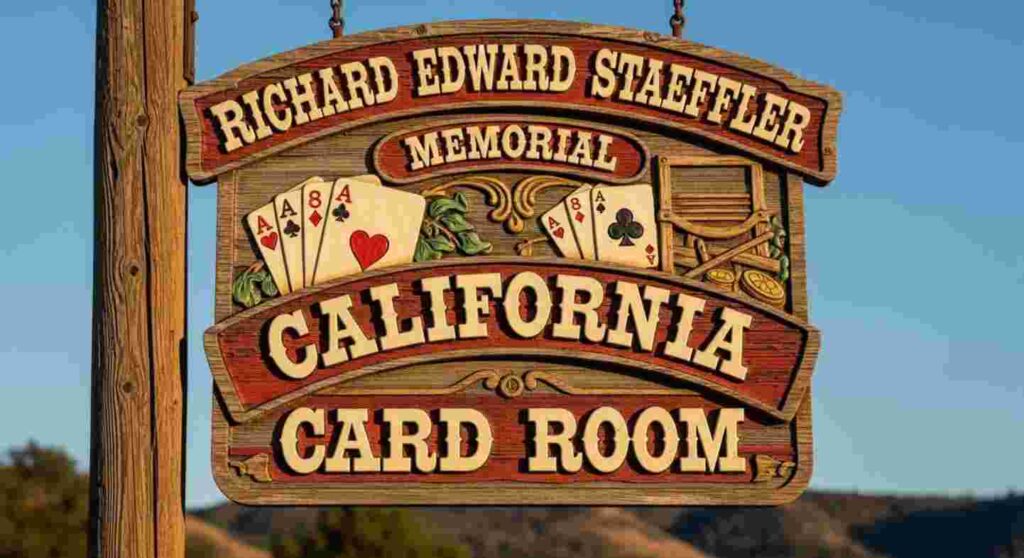
If you’ve seen the name, what is the Richard Edward Staeffler Memorial California Card Room and wondered what it is, you’re not alone. At first glance, the name evokes two things: a person whose life is being honored, and a distinctly Californian institution—the card room. But there’s more here than meets the eye. This kind of venue is not just a place to play cards; it’s often a hub of community, memory, and culture. Let’s unpack what a memorial card room usually represents, what you might expect to find there, and why places like this matter.
Table of Contents
ToggleA memorial by a different name: honoring a life through place
When a public space bears someone’s full name—especially with “Memorial” attached—it signals an intention to honor a person’s life or legacy. Whether Richard Edward Staeffler was a beloved community member, a local philanthropist, an avid player, or an industry figure, naming a card room after him suggests that those who run the venue wanted to preserve his memory in a meaningful, living way.
Memorial naming does more than put a plaque on a wall. It ties everyday activities—laughing with friends at a table, learning a new game, or supporting local charity events—to the story of one person. Visitors don’t just play cards; they participate in a small, ongoing tribute.
What Is the Richard Edward Staeffler Memorial California Card Room?
California has a unique and storied tradition of card rooms that differs slightly from those found on reservations or in Nevada. Many California card rooms are focused on table-game action—poker in its many variants, rummy, blackjack in some places—and some operate under specific state rules governing wagering and house participation.
Key features you’ll often see in a California card room:
-
Dedicated table games — poker (limit, no-limit, stud), baccarat, and other table games are common.
-
Player-to-player models — historically, many California card rooms have run games in ways that emphasize player-versus-player wagers rather than casino-run house games.
-
Community feel — compared with large destination casinos, card rooms often attract regulars who socialize, form leagues, and build traditions.
-
Tournaments and lessons — from weekly tournaments to beginner classes, card rooms often serve as training grounds for new players.
-
Food, drink, and events — many card rooms host fundraisers, charity nights, and community events that go beyond gaming.
If the Richard Edward Staeffler Memorial card room follows this model, expect both serious action and friendly faces.
What you might find inside the Richard Edward Staeffler Memorial Card Room
While each card room has its own personality, a memorial room often blends functionality with a sense of homage. Here are features you might expect:
-
A commemorative wall or display — photos, a short biography, or a plaque that explains who Richard Edward Staeffler was and why the room bears his name.
-
Tournament schedule — regular events, from low-buy-in nights to higher-stakes weekend tournaments.
-
Learning resources — beginner classes, strategy nights, or mentoring programs connecting veterans with new players.
-
Comfort and accessibility — comfortable seating, well-lit tables, clear signage, and often food and beverage service.
-
Community programming — charity events, memorial tournaments, or anniversary celebrations that keep the namesake’s memory active.
These elements make the venue feel both like a business and a civic space.
Why naming a card room matters to the community
At first, a memorial card room may seem like a niche honor. In practice, it can have rippling effects:
-
Keeps local memory alive: People who never met the namesake may still learn about their life story when they visit.
-
Builds community traditions: Annual memorial tournaments or charity drives become part of the institution’s identity.
-
Generates economic activity: Card rooms bring foot traffic to neighborhoods—patrons eat, shop, and stay nearby.
-
Offers a social hub: For many regulars, the card room is a daily or weekly meeting place where social ties are strengthened.
The bearing of a personal name helps transform a commercial venue into something with civic resonance.
Visiting etiquette: what to do at a California card room
If you plan to visit a memorial card room—whether out of curiosity or to play—keep these practical tips in mind:
-
Check the schedule: Card rooms run different games at different times. Look up tournaments or cash-game schedules before you go.
-
Learn the house rules: Each room has nuances: buy-in minimums, rake structures, and break procedures. Ask the floor manager for a quick rundown.
-
Be courteous: Table etiquette matters—avoid slow play, respect dealers and fellow players, and follow staff directions.
-
Bring ID and cash: Many rooms require ID for registration and may have cash buy-ins, though most now accept cards.
-
Ask about the memorial: If you want to know more about Richard Edward Staeffler, staff or posted materials may point you to a biography or commemorative resources.
A respectful visit both honors the space and enhances your own experience.
Memorialization beyond the plaque: programming that keeps a legacy alive
The strongest memorials are active ones. Card rooms that truly honor a person often embed their legacy into programs—scholarships for local youth, charity poker nights supporting causes the namesake cared about, or mentorship programs that foster the next generation of players and community leaders.
If the Richard Edward Staeffler Memorial Card Room has such programs, they’re worth highlighting. They show the difference between naming something after someone and using the venue as a vehicle for ongoing good.
Wrapping up: more than a place to play
The Richard Edward Staeffler Memorial California Card Room likely functions on several levels: as an entertainment venue, a community meeting place, and a small civic memorial that keeps a person’s story alive. For players, it’s a place to sharpen skills and compete. For the community, it’s a place that gathers people and channels memory into action—whether through charity, tournaments, or shared ritual.
If you’re writing about this room for a website or planning a visit, consider including practical details (hours, location, rules) and human ones (the story of Richard Edward Staeffler, testimonials from regulars, and upcoming memorial events). Those elements together give readers both the facts they need and the context that makes the place meaningful.
If you’d like, I can expand this into a local-guide style post with a sample “what to expect” section, a mock tournament calendar, or a short bio template you can adapt once you confirm the specific details about Richard Edward Staeffler. Which version would help you publish fastest?












Leave a comment