
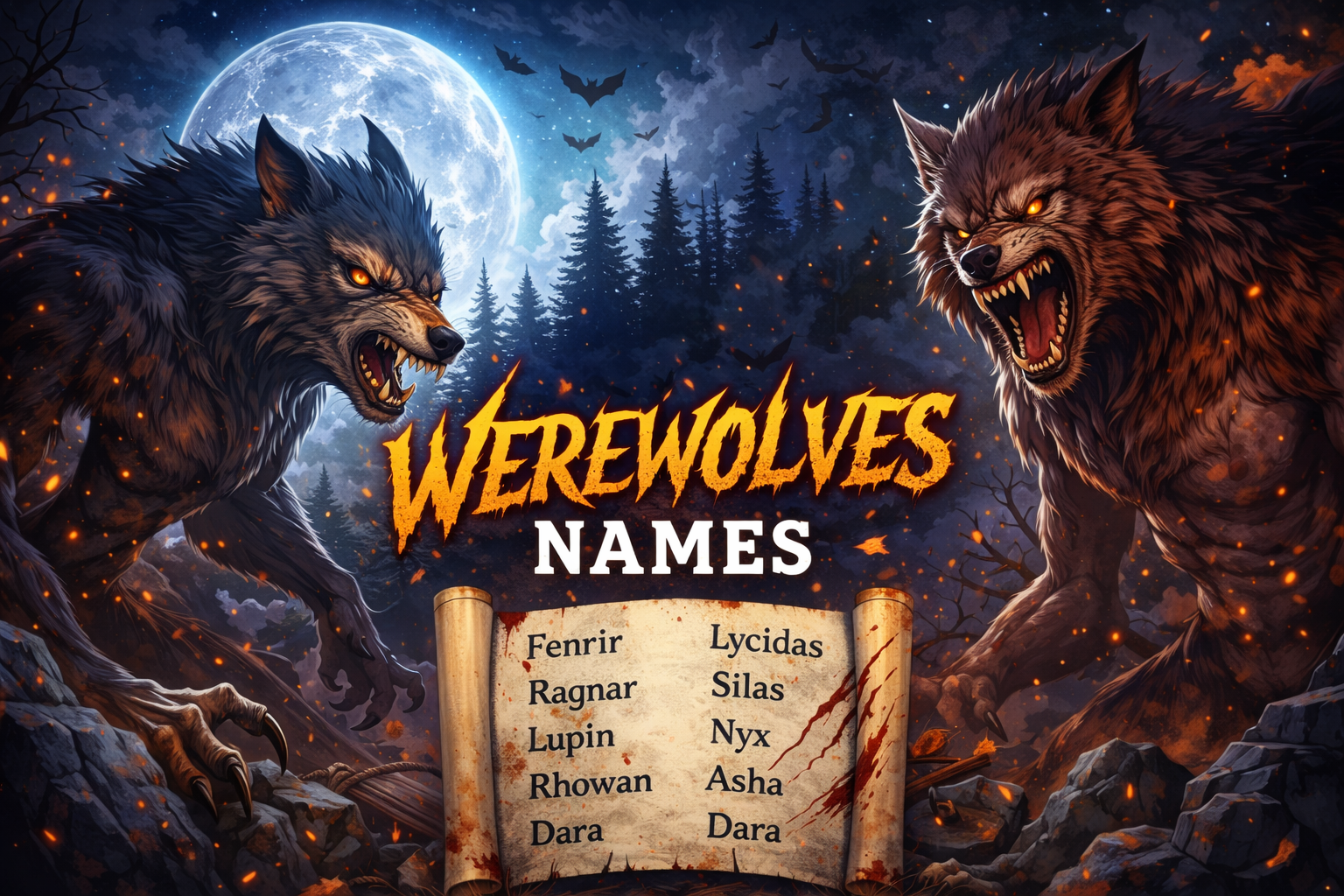
Werewolf Names have long captured our imagination, weaving their way through folklore and popular culture with a mysterious allure. From the chilling tales of moonlit transformations to the thrill of supernatural powers, these creatures embody a primal fear and fascination. But beyond their terrifying howls and menacing appearances lie the intriguing stories behind their names. Each werewolf name carries its own history, meaning, and cultural significance that adds depth to these legendary beings. Join us as we embark on a journey to explore the origins of famous werewolf names—unraveling myths, literature references, pop culture icons, and even some lesser-known gems along the way. Let’s dive into this captivating world where every name tells a story!
The Mythology Behind Werewolves
Werewolves have long haunted the pages of mythology. They symbolize the struggle between humanity and primal instincts. This duality resonates deeply within human experience.
Ancient cultures had various interpretations of these creatures. In Norse mythology, warriors could transform into wolves to gain strength in battle. Meanwhile, Greek legends spoke of Lycaon, a king cursed by Zeus for his impiety.
The connection with the moon is also significant. Many myths suggest that transformations occur during a full moon, linking werewolves to themes of madness and change.
This rich tapestry of stories shows how fears and fascinations intertwine through time. As societies evolved, so did their tales—each era adding new layers to this enigmatic legend. The mix of horror and allure keeps people intrigued even today.
Popular Werewolf Names in Literature
Literature has long been captivated by the allure of werewolves. These creatures often embody the struggle between humanity and primal instincts.
One iconic name is “Lycanthrope.” This term refers to individuals who transform into wolves, rooted in ancient mythology and still used today. It’s a nod to the deep-seated fears surrounding transformation.
Another notable character is Remus Lupin from J.K. Rowling’s Harry Potter series. He brings a touch of empathy to the werewolf narrative, showcasing vulnerability alongside ferocity.
In classic literature, we can’t overlook George Waggner’s “The Wolf Man,” which has influenced many modern portrayals. His journey grapples with identity and acceptance within society.
These names resonate deeply because they reflect more than just monstrous transformations; they symbolize complex human emotions, making them memorable in our cultural landscape.
Famous Werewolf Names in Pop Culture
Pop culture has given us some iconic werewolf names that resonate with fans worldwide. Characters like Jacob Black from the “Twilight” series brought a modern twist to the classic werewolf mythos, blending romance and supernatural elements.
Another memorable name is Remus Lupin from J.K. Rowling’s “Harry Potter” series. As a kind-hearted professor and a member of the Order of the Phoenix, his struggle with lycanthropy adds depth to his character.
In film, we can’t overlook “Wolfman,” portrayed by Benicio del Toro in 2010. This remake revived classic horror themes while introducing new audiences to the tragic allure of werewolves.
Even animated series have their share of notable names, such as Ozzy from “The Amazing World of Gumball.” These characters illustrate how versatile and captivating werewolves can be across different genres.
Real-Life Individuals with the Name
Some real-life individuals bear the name associated with werewolves, adding an intriguing layer to its significance. Take for instance, actor and musician **Michael J. Fox**—his middle initial often stands out in media circles where “Fox” can evoke images of cunning creatures.
Then there’s **Lon Chaney Jr.**, whose portrayal of the Wolf Man solidified his place in horror history. His legacy intertwines with the mythology surrounding these mystical beings.
In a different realm entirely, **Luca “Wolf” Prodan**, an Italian musician in Argentina during the 1980s, brought charisma to his stage persona while channeling a wild spirit reminiscent of werewolf legends.
These names illustrate how cultural touchstones manifest beyond fiction into our everyday lives, keeping that primal connection alive through their meanings and stories.
Lesser-Known Werewolf Names and Their Meanings
Among the myriad of werewolf names, some are shrouded in mystery. Take “Lycaon,” for instance. This name hails from ancient Greece and refers to a king transformed into a wolf by Zeus. It embodies themes of transformation and punishment.
Another intriguing name is “Wulfric.” Originating from Old English, it translates to “wolf ruler.” The connotation evokes images of strength and leadership within the pack.
“Fenrir” comes from Norse mythology, depicting a monstrous wolf destined to play a pivotal role during Ragnarok. His name signifies ferocity and inevitability.
There’s “Amarok,” rooted in Inuit folklore. This solitary wolf hunts alone at night, representing independence and wildness—an embodiment of the untamed spirit that resides within every werewolf myth.
These lesser-known names deepen our understanding of werewolves’ complex identities across cultures.
The Evolution of Werewolf Names Throughout History
The evolution of werewolf names reveals fascinating shifts in culture and language. Early mentions often derived from Old English or Latin, reflecting local folklore. “Lycanthrope,” for instance, combines Greek roots meaning “wolf” and “man,” encapsulating the duality.
As stories spread across Europe, names morphed into various forms. In some regions, the term “loup-garou” emerged in French tales, linking the creature to both human and beastly traits. This name painted a vivid picture of transformation.
In modern literature and film, iconic figures like Remus Lupin from J.
K. Rowling’s universe have popularized contemporary interpretations of werewolves. These names resonate with audiences through their connections to unique characteristics or moral dilemmas.
Cultural variations also play a role; different societies offer distinct nomenclature that reflects their values surrounding the supernatural. Each iteration adds layers to our understanding of these mythical beings and underscores humanity’s ongoing intrigue with the unknown.
Conclusion: The Enduring Fascination with Werewolves and Their Names
The fascination with werewolves and their names stretches across cultures and centuries. These creatures, caught between humanity and wildness, evoke a deep sense of mystery. Each name carries its own weight—imbued with history, mythology, or storytelling significance.
From classic literature to modern films, these names resonate with audiences. They conjure images of moonlit transformations and primal instincts. As society evolves, so do the interpretations of what it means to be a werewolf. Names that once represented fear can also embody strength or even vulnerability.
Additionally, lesser-known names continue to emerge from folklore around the world, enriching our understanding of this mythical being. The evolution of these names reflects changing perceptions about nature and humanity itself.
Werewolf names are not just labels; they encapsulate stories that connect us all to an age-old narrative about transformation and duality. This enduring allure keeps both the creatures themselves alive in our imaginations and reminds us why we continue to explore their origins today.












Leave a comment