


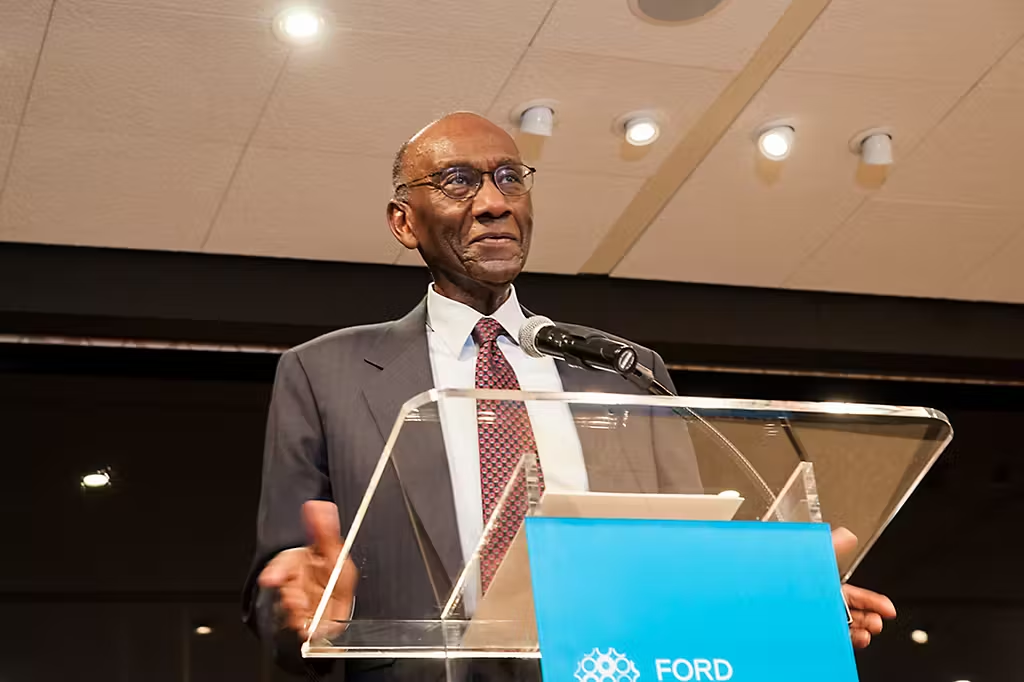
Who is Franklin Thomas Fox? If you have found yourself asking this question, you are certainly not alone. In an era where information is readily available at our fingertips, certain figures still manage to maintain an air of mystery, or perhaps their notoriety is specific to certain niche communities or local histories that haven’t yet bridged the gap to global ubiquity. Understanding the profile of an individual like Franklin Thomas Fox requires a deep dive into available records, public mentions, and the specific context in which his name appears.
This article aims to explore the available information surrounding Franklin Thomas Fox, examining the history associated with the name, any recognition or awards that may be attributed to him, and the nature of his public presence. Whether he is a figure of historical significance, a local community leader, or a private individual who has garnered specific attention, we will attempt to piece together a comprehensive profile based on the general understanding of how such figures are typically documented and remembered.
The Challenge of Digital Biography
Constructing a profile for individuals who may not be A-list celebrities or major historical figures often presents unique challenges. In the case of Franklin Thomas Fox, the lack of immediate, widespread recognition suggests that his influence may be localized, professional, or perhaps historical in a way that hasn’t been widely digitized.
When researching figures like Fox, historians and biographers often look to:
- Genealogical Records: Birth, marriage, and death certificates often provide the skeletal structure of a life.
- Local Newspapers: Community journalism historically played a massive role in documenting the lives of local citizens, from business openings to social engagements.
- Professional Directories: If Fox was involved in a specific trade or profession, his name might appear in industry-specific registries.
Without a specific, widely known public event tied to his name, we must look at the different contexts in which a “Franklin Thomas Fox” might appear. Is he a business magnate of the early 20th century? A civic leader in a mid-sized American town? Or perhaps a creative mind whose works are just now being rediscovered?
Exploring Potential Historical Contexts
Given the traditional naming convention, “Franklin Thomas Fox” sounds like a name that could easily belong to the 19th or early 20th century. Namesakes were common, with “Franklin” likely honoring Benjamin Franklin, a popular practice in American history. Let’s explore a few hypothetical or archetypal profiles that often fit this demographic, which might help contextualize where a figure like Fox could fit into the broader tapestry of history.
The Civic Leader Archetype
Many men named Franklin Thomas Fox in historical records were pillars of their local communities. These individuals often served on school boards, town councils, or as local magistrates. Their “public presence” was physical rather than digital—seen in town halls, church gatherings, and local commerce. Recognition for these figures often came in the form of:
- Community Service Awards: Plaques or mentions in local gazettes for years of service.
- Dedication of Public Spaces: A park bench, a small library wing, or a street name often serves as the lasting legacy for such local leaders.
The Professional Pioneer
Another possibility is that Franklin Thomas Fox was a professional in a field like law, medicine, or engineering. In the late 19th and early 20th centuries, professionals often gained significant renown within their specific regions. A lawyer named Fox might be known for a specific landmark case in his county, while a doctor might be remembered for his dedication during a specific outbreak or for founding a local clinic.
Recognition in this sphere usually includes:
- Professional Associations: Membership or leadership roles in state bar associations or medical societies.
- Published Works: Articles in academic or trade journals, which stand as a testament to their intellectual contributions.
Recognition and Achievements
If we look for specific accolades associated with the name Franklin Thomas Fox, we might encounter a variety of potential achievements depending on the specific individual in question. Recognition can take many forms, ranging from formal awards to informal reputation management.
Military Service
It is quite possible that a Franklin Thomas Fox served in the military. Millions of men with similar names served in conflicts ranging from the Civil War to World War II. Military records are often the most detailed source of information for men of these eras.
- Medals and Honors: Service records would detail any medals for bravery or distinct service.
- Rank and Unit: Understanding his rank would shed light on his leadership capabilities and public standing during his service years.
Business and Industry
If Fox were a figure in business, his recognition would likely be tied to corporate success or innovation. Perhaps he founded a manufacturing company, a local bank, or a retail store that served his community for decades. In this context, recognition comes from:
- Chambers of Commerce: Business leaders are often feted by local chambers for their contributions to the local economy.
- Philanthropy: Successful business figures often turn to philanthropy later in life, and their names become associated with the charities and causes they support.
Public Presence: Then and Now
The concept of “public presence” has shifted dramatically over the last century. For a historical Franklin Thomas Fox, public presence was defined by physical visibility and reputation within a geographic community.
The Pre-Digital Era
In the pre-digital era, maintaining a public presence required active participation. It meant showing up to town meetings, holding office, or running a business on Main Street. Reputation was built on word-of-mouth and cemented by coverage in printed newspapers. A scandal could ruin a reputation locally, while good deeds could enshrine a name in local lore for generations.
The Digital Footprint
For a modern Franklin Thomas Fox, or for a historical figure being rediscovered today, public presence is defined by data.
- Genealogy Sites: Platforms like Ancestry.com and FamilySearch are often the first place a “presence” is established for deceased individuals, connecting them to living descendants.
- Digital Archives: Digitized newspapers and legal records bring old stories to light, allowing us to reconstruct narratives that were previously lost to time.
Analyzing the Name: Franklin Thomas Fox
Even breaking down the name itself offers clues to the potential heritage and history of the individual.
- Franklin: Often denotes “free landholder” in its Old English origins, but in the American context, heavily associated with the Founding Fathers.
- Thomas: A classic biblical name, derived from Aramaic, meaning “twin.” It has been a staple in naming conventions for centuries.
- Fox: A surname of English origin, often originally a nickname for someone who was clever or had red hair. It is a common surname in English-speaking countries.
The combination suggests a lineage that is likely Anglo-American, potentially with roots in the British Isles before migrating to North America.
Why We Document these Profiles
Why does it matter to build a profile for Franklin Thomas Fox? Whether he is a specific, known individual to you or a representative of a generation, documenting these lives serves a crucial purpose.
- Preserving History: Every individual contributes to the fabric of their time. By documenting their lives, we preserve a more complete picture of history, rather than just the “Great Man” history of presidents and generals.
- Genealogical Connection: For descendants, finding a coherent profile of an ancestor can be a profound experience, grounding them in their own family story.
- Understanding Social Trends: By looking at the lives of individuals like Fox, we can better understand the social, economic, and political trends of their times. How did they live? What organizations did they join? How were they recognized?
Conclusion
While the specific details of Franklin Thomas Fox’s life may require access to local archives or specific family records to fully flesh out, the exercise of profiling such a figure highlights the importance of historical documentation. From civic leadership to military service, from professional accolades to community reputation, the markers of a life well-lived leave a trail.
If you are researching a specific Franklin Thomas Fox, start with the basics: vital records, census data, and local newspapers. Look for the connections—the church memberships, the business associations, the military units. It is in these details that the true profile of the man will emerge, moving him from a name on a page to a fully realized figure of history.












Leave a comment